
Two Key Problems Make Landscape Fabric a Poor Option
Landscaping fabric is often marketed as a permanent solution for keeping weeds out of your garden. It seems like a low-maintenance, quick solution for tending your garden. However, for Austin gardens (especially those created on clay-heavy soils with heavy run-off), your landscaping fabric can do more harm than good, causing problems that can ruin your garden.
Landscaping fabric decreases the permeability of your soil and has negative long-term effects on your soil. Let’s dive into the two main issues we see with landscape fabric when designing sustainable landscapes.
Why Landscaping Fabric Isn’t an Option for Sustainable Landscapes
Much of the soil we see in the Austin area is naturally dense and already low in permeability. If you already deal with run-off concerns, decreasing the permeability of your soil even more by adding landscape fabric will worsen your run-off during a rain storm and, by doing so, will cause your garden to be rapidly stripped of mulch and nutrients. Reducing your soil’s permeability by any amount is particularly harmful to your soil health.
Since we want your garden to increase your permeability, landscaping fabric would work against your goals and increase your problem instead of decreasing it.
How Landscape Fabric Damages Soil Health Over Time
The soil is the foundation of your garden, and soil rehabilitation is the foundation of the Shamballah Home and Gardens method.
Healthy soil absorbs more rain fall, requires less irrigation, requires little to no nutrient supplementation, and promotes the growth of vibrant plants.
In contrast, poor soil increases run-off, requires frequent irrigation, necessitates regular nutrient supplementation, and produces small, unimpressive plants. Much of the soil in Austin is of poor quality. It is clay-rich, low organic matter, dense, and has low absorption and nutrient content. To have long-term success in your garden, it is essential to address your soil quality and health.
Incorporating a decomposing compost layer into your soil is crucial for breaking up the clay, increasing organic matter, enhancing water retention, and increasing nutrient availability. Landscaping fabric prevents the ability to build the soil, essentially locking you into poor soil conditions, exacerbating already compact, low-water, low-oxygen soils by decreasing permeability and preventing soil enhancement over time.
Designing Sustainable Landscapes and Creating Stewards
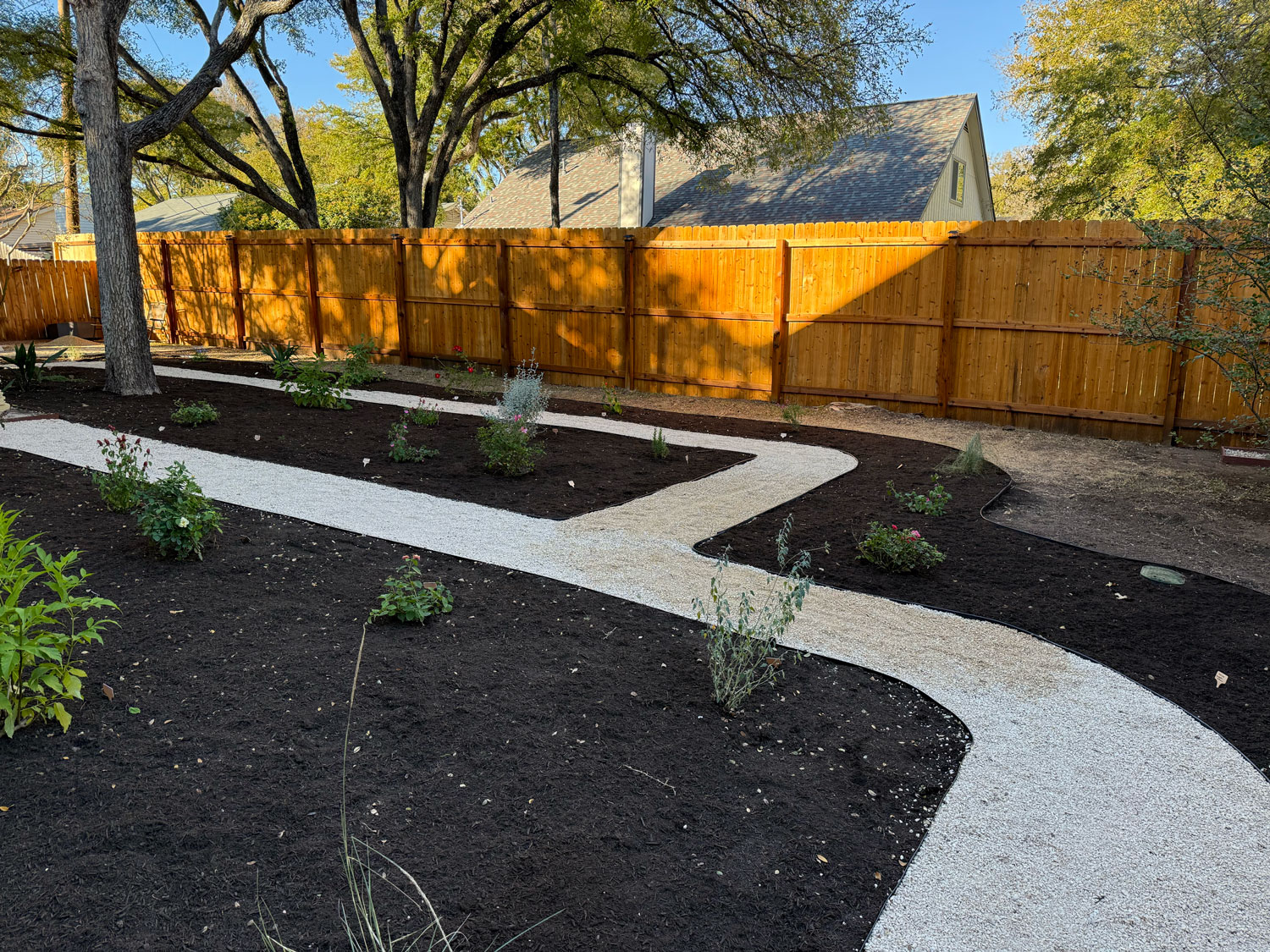
Landscape fabric may look like a quick and convenient solution to keep weeds out, but in reality, it works against designing sustainable landscapes.
If your goal is a garden that thrives, absorbs water, and gets better every year, soil rehabilitation is your answer, not landscape fabric! Reach out to us today to schedule your initial consultation, where we’ll discuss your goals, vision, and priorities for your outdoor space. This conversation sets the foundation for a design that reflects both your needs and the character of your land.