
The Project | Texas Native Plants Landscaping
When this client first contacted Shamballah Home & Gardens, she sensed her land had more to offer, even if she couldn’t yet picture what that would look like. She called it her ‘yard of potential,’ recognizing there was room for growth and transformation. Through our consultation, her intentions became clear: she wanted a landscape that would strengthen the local ecosystem, provide year-round beauty, be easy to care for, and give her grandchildren a place to connect with nature. From there, we listened to the land and let its character guide the design.
Once we began, the project moved forward quickly. Our first site visit was at the end of January, and by early April, installation was complete. In just over two months, this space was fully transformed while using Texas native plants in the landscaping.
Design & Inspiration
This property stood out for its direct connection to the greenbelt, with no clear boundary between the yard and the wild land beyond. From the start, it was clear the design needed to incorporate both the cultivated garden and the natural landscape, creating a space where the two could meet and support each other.
Limestone turned out to be the centerpiece of that balance. Only a small amount was visible during the first site visit, but the surrounding terrain made it clear that this property sat within an isolated pocket of the iconic limestone bluff ecosystems found throughout the Central Texas Hill Country, now largely lost to development in the area. This shifted our approach: instead of simply building a garden, we set out to restore a small piece of this unique habitat. Early on, we focused on understanding how close the limestone was to the surface, since that would shape both the look and the structure of the garden.
The client fully embraced Shamballah’s Holistic Landscape Approach, even though she wouldn’t describe herself as particularly “new age.” She simply wanted to do right by her land and the land around it, and she sensed the property held more potential than its current state suggested. She took several leaps of faith throughout the process, and by the end she was thrilled, not just with how the space looked but with the land-supporting methods behind it and the overall feel of the finished garden. Trusting the process from start to finish was a key reason the project came together so successfully.
- All
IMG_2186
IMG_2015
Our Process
The project followed the same general phases as any Shamballah Home and Garden design: consultation, concept formation, design creation, supply acquisition, and installation. Installation began with sod removal, soil preparation, and bed creation, then moved into planting, irrigation installation, and topdressing. What made this project distinct was the unexpected detour into pressure-washing a cliffside.
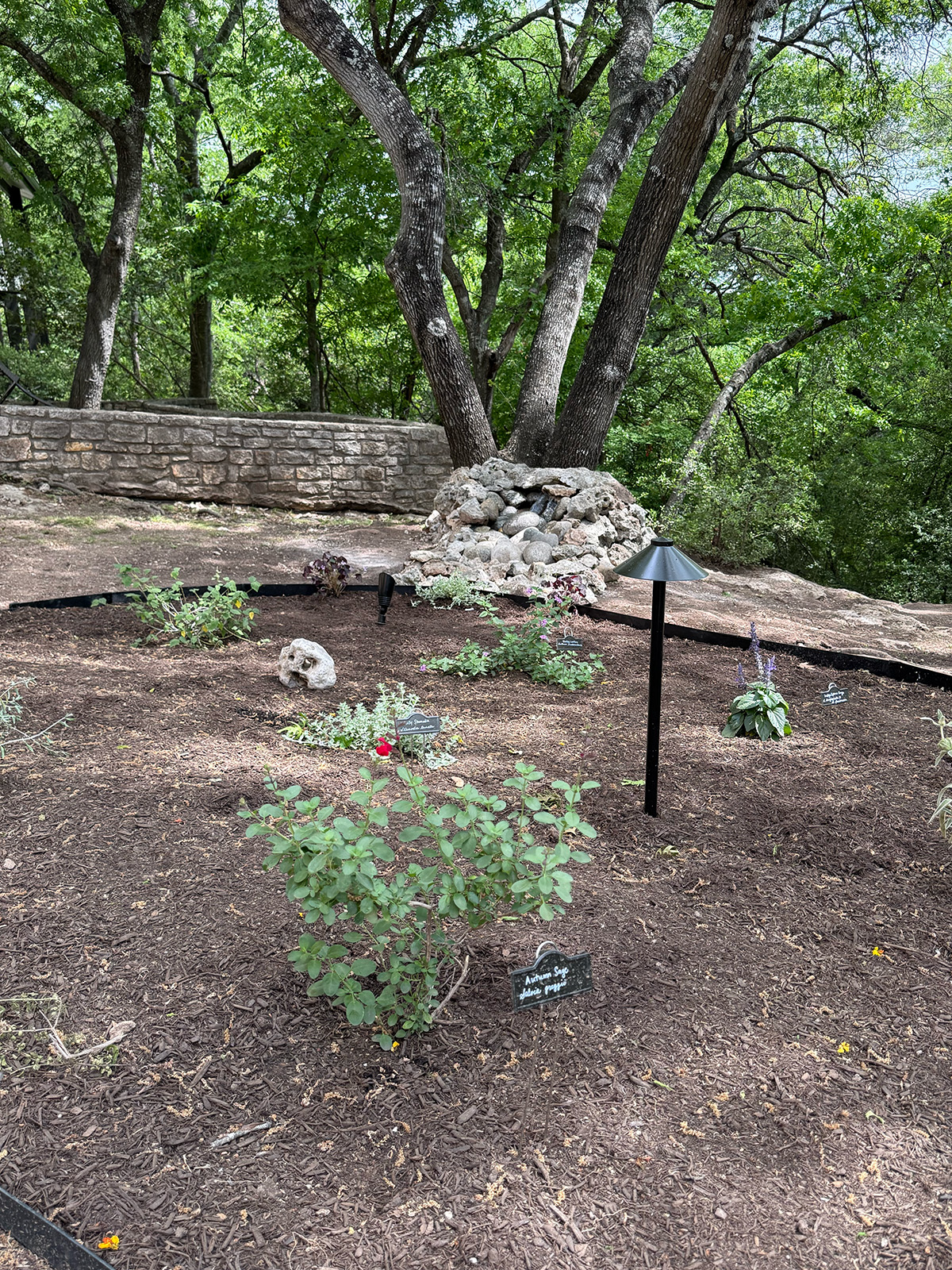
Unexpected challenges are part of every project, since so much of this work involves terrain that can’t be fully understood until the ground is broken. Rather than treating those surprises as obstacles, we use them as opportunities to create something unique to each property. Wherever possible, the goal is to use pieces of the property itself within the installation. On this project, limestone uncovered during excavation was repurposed into pathways, a water feature, and ornamental accents throughout the garden beds.
The biggest challenge was removing a large amount of clay without harming the limestone underneath. This required careful work and led us to use pressure-washing to gently clear the clay from the rock face.
Plant & Material Selection with Texas Native Plants in Landscaping
Every plant was chosen to help the garden blend naturally with the wild land next to it and to support the broader ecosystem. We placed more ornamental plants near the house, gradually shifting to native wild species toward the edges. We focused on adding native plants that were missing from the area to help increase local biodiversity.
One of the most exciting elements of the plant selection was a partnership with the Native Plant Rescue Project, which provided seeds of rare plants native to the Enchanted Rock ecosystem to incorporate more Texas native plants into the landscaping. Those seeds were used to help recolonize the exposed limestone bluff, reintroducing a rare and threatened species that had disappeared from this area.
The Results
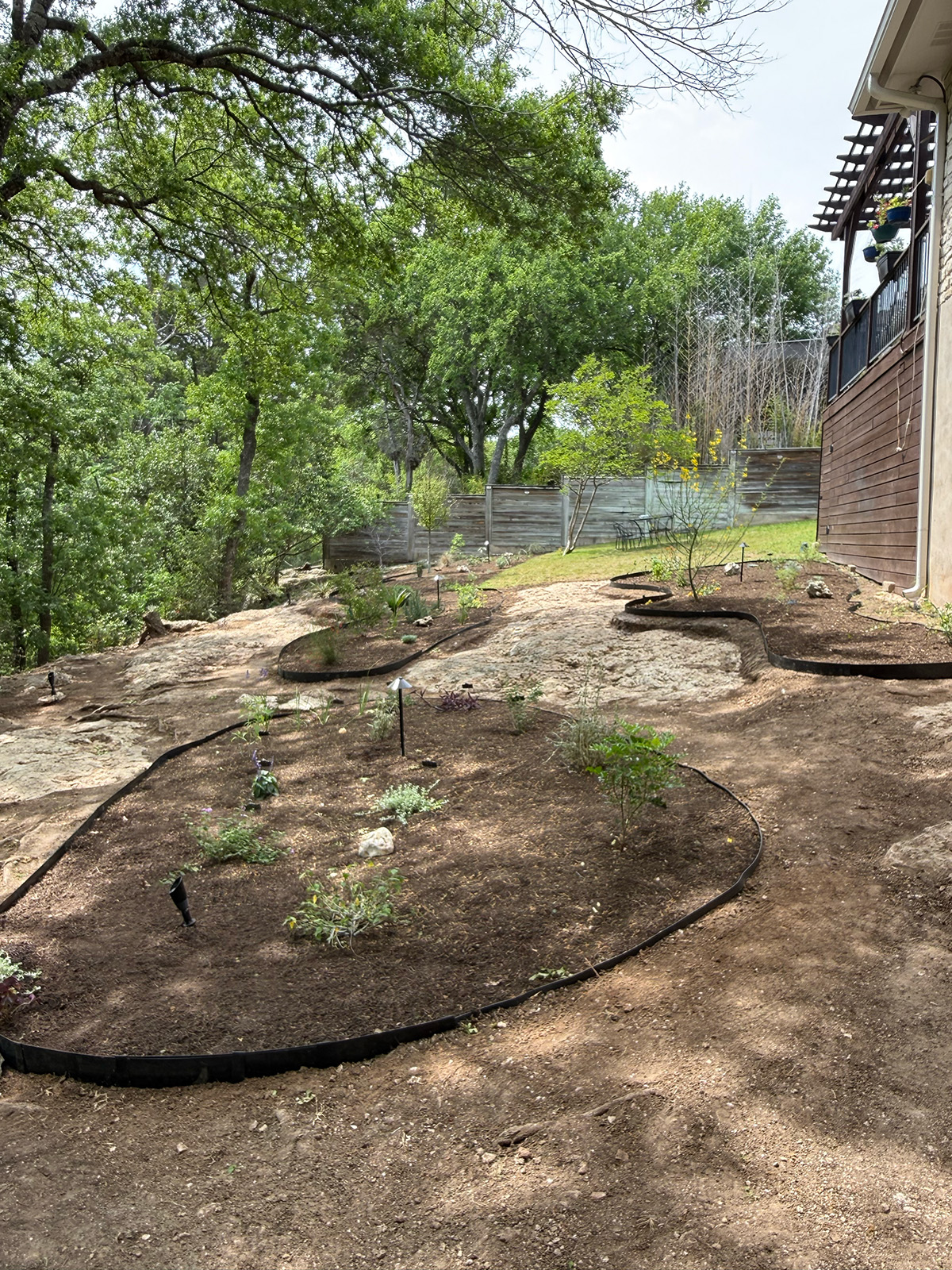
The transformation was remarkable, quite possibly the team’s favorite project to date, and certainly among the top three. The finished space carries an undeniable sense of harmony and magic. Butterflies began arriving before planting was even finished, and despite the richness of the plant palette, the entire design ended up fully deer-resistant. It’s a space made for wandering and discovery, enhancing daily life on the property’s elevated back deck and the view from the bay window overlooking the back garden. Installed lighting lets the family enjoy the space in the evenings, including when they have company, without disturbing the surrounding wildlife. The blend of cultivated garden and wild ecosystem means there’s always something new to notice; no two days in the garden look quite the same.
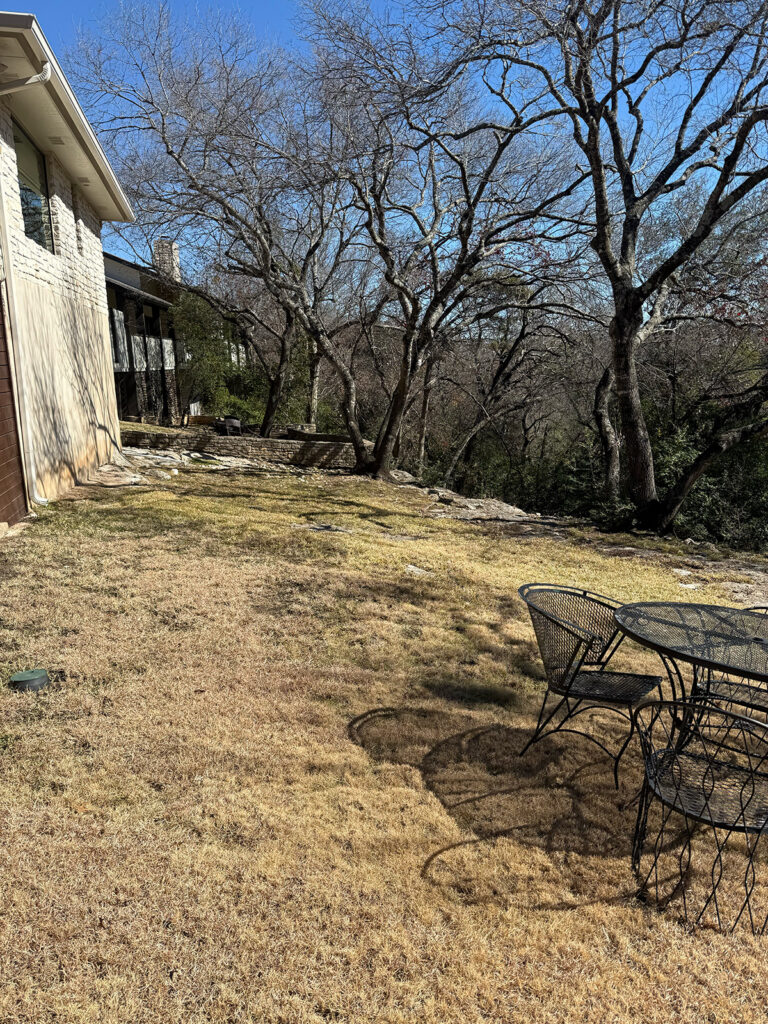
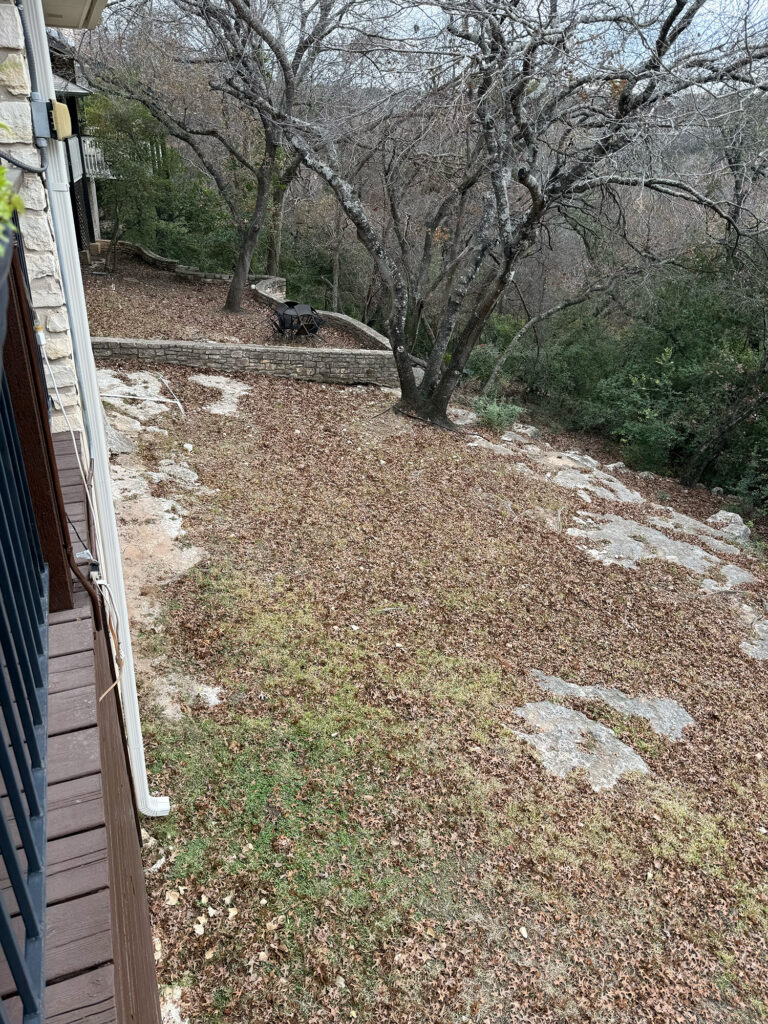
Compared to the original space, there’s almost no fair comparison to draw. What was once a flat, one-dimensional yard is now a living, layered landscape.
- All
IMG_2510
IMG_2517
Client Experience
The clients were thrilled with the finished results. They couldn’t quite see the vision the way the design team could, so they were even more relieved when it started to take shape. There is always a magical moment with every project when the design reveals itself and comes off the page and into reality, and with this project, that moment was especially special because the transformation was so stark. In the end, it was better than any of us had imagined.
Maintaining the Garden Going Forward
As with any new garden, the most important maintenance happens early, while the plants are getting established. Weeds tend to grow faster than young plantings, so keeping up with them in the first year or two is key. Once the garden fills in, weeding becomes much less of a chore. Because the soil here is mostly clay, ongoing soil improvement will be important for long-term health. The design also includes gentle stewardship of the wilder areas, helping rare native plants take hold and keeping invasives out. After a season or two of this care, the garden will need very little maintenance, functioning as a self-sustaining ecosystem.
Standout Features With Texas Native Plants Landscaping
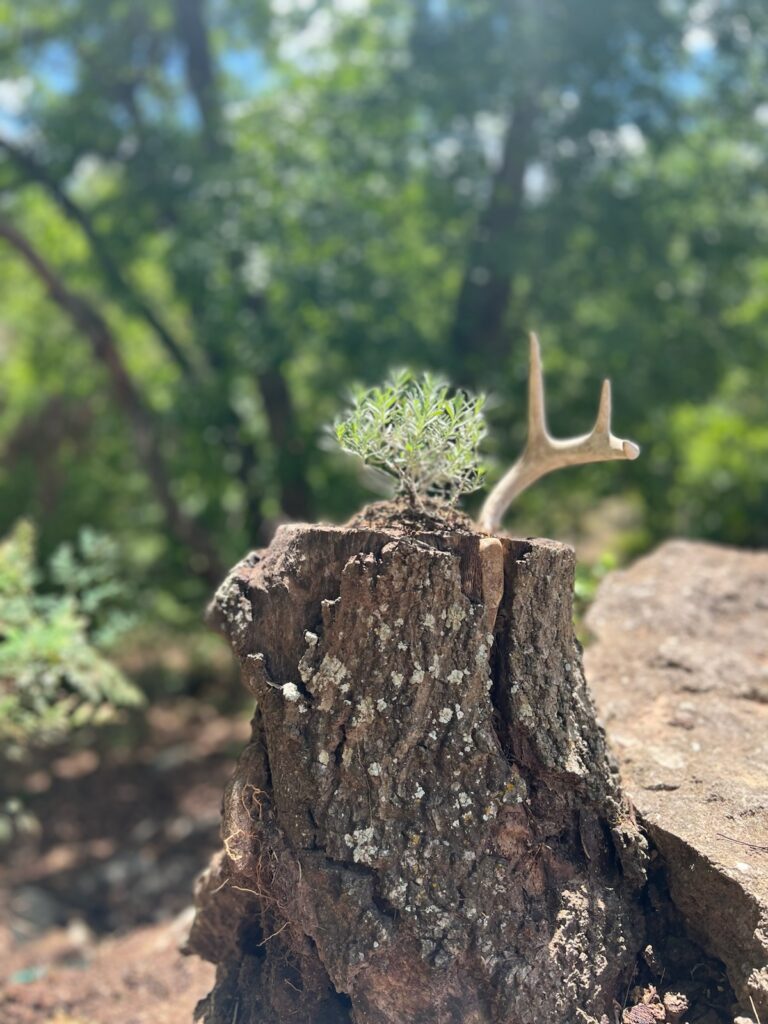
Several elements make this design one of a kind. A disappearing stream, built largely from stone sourced on the property, appears to spring from the base of an established Texas Live Oak. A young Cedar Elm sapling has quickly and beautifully established itself since being planted. An unplanned hollow stump (discovered during installation rather than part of the original design) was repurposed as a natural planter, accented with an ornamental deer antler found nearby in the ravine. All three features are expected to grow more striking with time. Perhaps the most exciting element of all, though, is the promise still unfolding: the native seeds from the Native Plant Rescue Project, whose results will reveal themselves in the seasons ahead.